Wheat and barley farmers all across the East Coast of America look to the annual “Small Grain Disease report” published by the UMD small grain pathology lab. It guides farmers' decisions on which strains to plant, helps researchers pinpoint which diseases are the most prevalent, and how resistant new strains are based on their performance in the lab's three research fields.
Each field has different soil conditions to test the plants' tolerance to the range of soils and diseases on the East Coast. This testing is vital for farmers and researchers alike, whether they are planting for profit, developing the next breakthrough in fungicides, or creating a new disease-resistant strain.
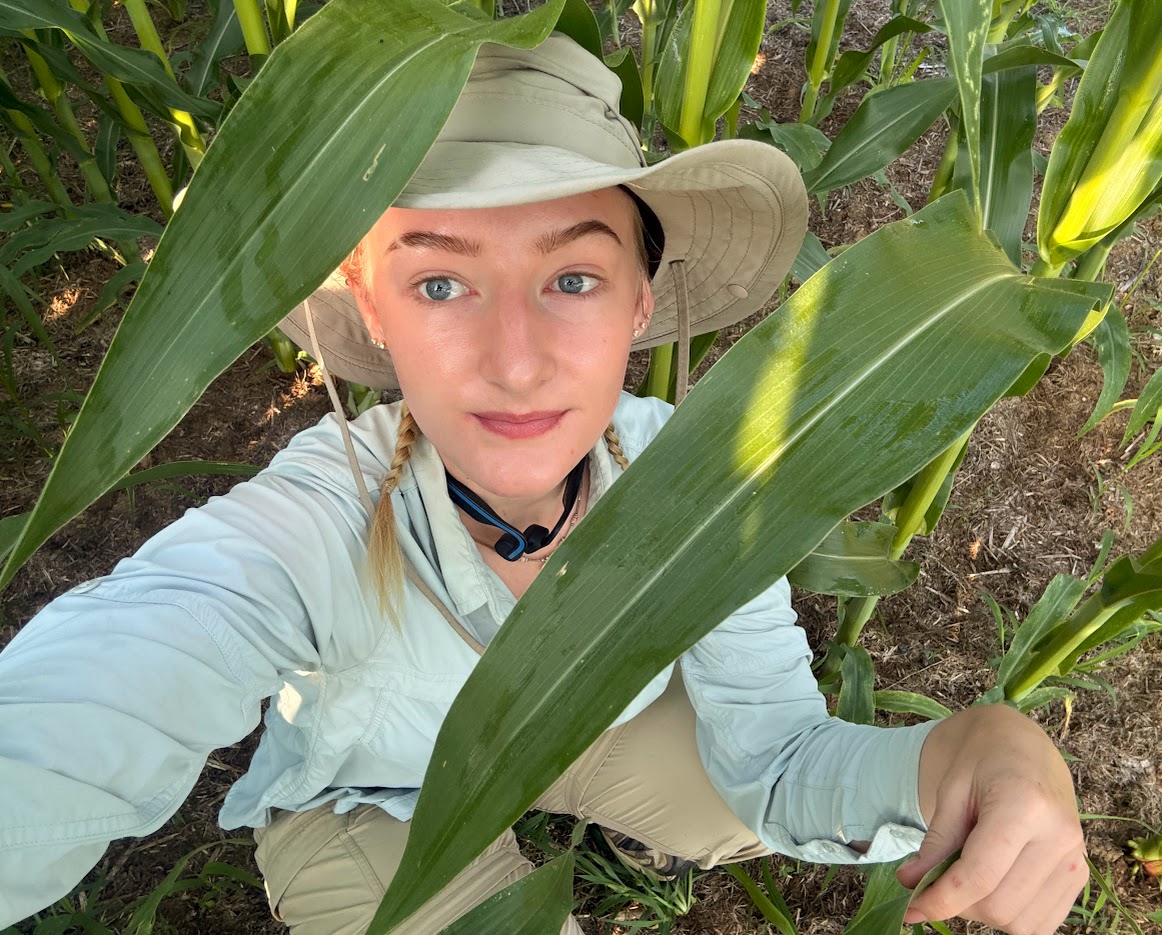
My name is Olivia Henshaw-Black. I’m in the Environmental Stewardship program, and I worked in Dr. Tiwari’s lab for two summers. I spent time in all three fields, in the greenhouse, and in the lab. The first several months of the summer were my favorite part of the season. We rated each and every strain on a variety of conditions including rust, Fusarium Head Blight (FHB), Barley Yellow Dwarf Virus (BYDV), powdery mildew, glume blotch, and lodging. This requires a sharp eye and consistency, as even a well-trained eye can miss light infection. There were several times when a glance would indicate the plot had no leaf rust, but on closer examination I spotted both leaf and stripe rust hiding on leaves in the center of the plot.
When the plants are dry and seed heads turn a pale yellow, it’s harvest time. This means all hands on deck. We harvested some plots by hand, while others could be harvested using a combine. I had the privilege to ride inside the combine a few times and see how it worked, but most of the time I was hand harvesting. Hand harvesting up to 30 spikes per plot across hundreds of plots sounds daunting, but my coworkers made the work manageable. There was always someone, despite the heat of a Maryland July, who was upbeat. We would tell stories or crack jokes about who was winning the harvesting race, and that would make the work feel manageable.
The last part of the summer season involves processing what we have harvested and sending samples out for FHB testing. Hand-harvested samples require threshing and then grinding into flour, while combine-harvested bags could skip the first step as they were threshed by the combine. This is also the time of year when plants grown in the greenhouse need harvesting.
Though it was much hotter in the greenhouse ranges than the threshing/grinding room, I loved being surrounded by the plants, so I would usually jump at the chance to harvest. The noise of threshing and grinding usually left little room for conversation. However, I appreciated the variety of environments throughout the season, from fields full of human and insect chatter to the quiet greenhouse ranges.
I started this internship with a wide variety of plant-related interests, but a lack of direction. Through my experiences, I’ve discovered a fascination with diseases and, after finishing my Horticulture bachelor's degree, I plan to complete a master's in Pathology and Diagnostics. My time in Dr Tiwari’s lab gave me valuable knowledge about field research, how much precision is required for accurate data collection, and how important a reliable team is. I also learned how important it is to me that my work goes towards helping farmers and researchers, something I aim to pursue in my career.
Pro tip: use cooling neck towels or ice bandanas to beat the heat!